In 1979, a weathered fisherman named Ah Qiang lived in a stilt house on the muddy banks of the Shenzhen River. His days were ruled by the tides, his wealth measured in dried oysters, and the creak of wooden sampans. Across the water, the hills of Hong Kong glittered with electric lights he could not afford. When government surveyors first arrived, poking sticks into his family's oyster beds and talking of "economic zones", Ah Qiang spat into the mud. He wanted nothing to do with it.
Forty years later, Ah Qiang's grandson works on the 55th floor of a glass tower in the Nanshan district, writing code for autonomous drones. The oyster beds are now a waterfront boulevard, and the stilt house lives only in faded photographs at the Shenzhen Museum. This is Shenzhen, a city so young, so fast, so relentlessly forward-looking that its own origin story still feels like a collective hallucination. For the international innovator, investor, or curious wanderer, Shenzhen's stories are not just history lessons. They are an invitation to witness and participate in the greatest urban experiment of our time.
"Time Is Money, Efficiency Is Life"
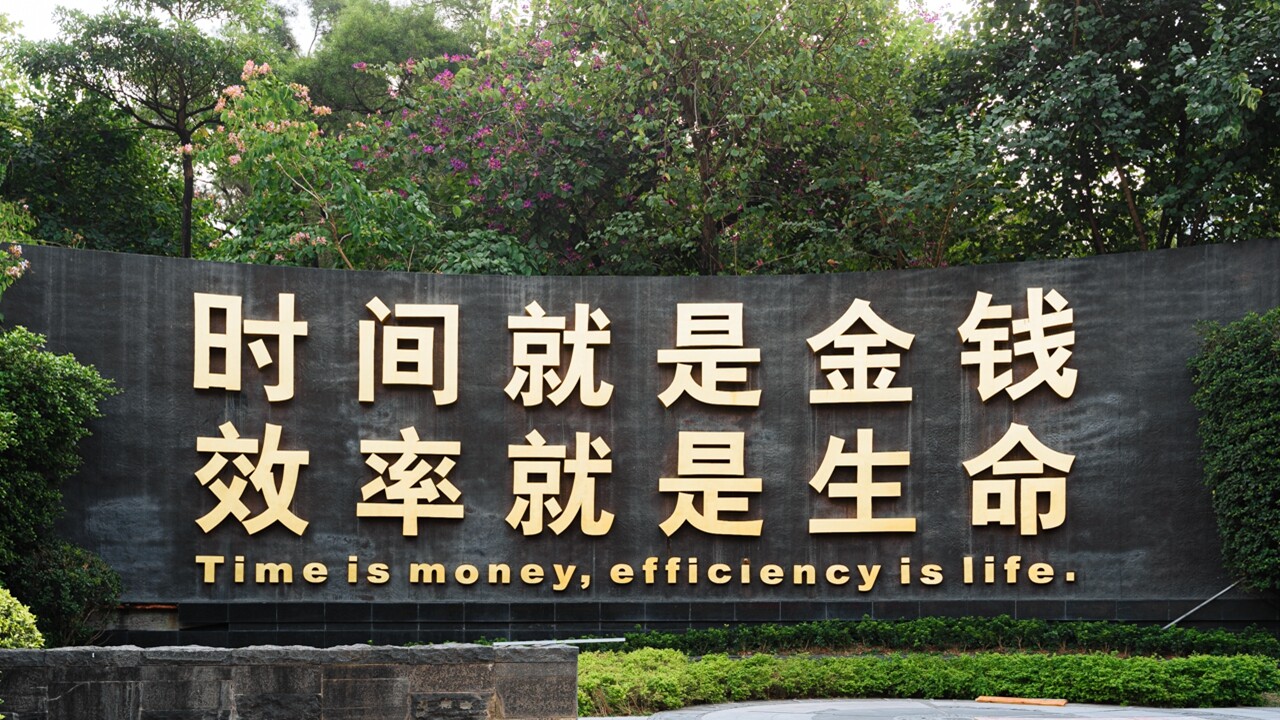
The iconic slogan "Time is money, efficiency is life" can be seen at the base of Weibo Hill Park
The story of Shenzhen's speed is best told through a single building: the International Trade Centre Tower. In 1982, this was the tallest construction project in China, and the state-run builders were struggling. Enter a young construction manager named Zhang Zhiquan, who proposed a radical idea: instead of building one floor at a time, workers could use a "slip-form" technique, pouring concrete continuously as the steel frame climbed upward. Skeptics called it reckless. But the team pushed ahead, and the result stunned the nation: one new floor every three days. The "Shenzhen Speed" was born, and the tower topped out at 160 meters in just 10 months.
This ethos, ambitious, impatient, and allergic to bureaucracy, seeped into every corner of the city. Shenzhen became a magnet for millions of dreamers from China's interior, people who left behind state-assigned jobs and rural villages to gamble on themselves. They gave the city its distinctive DNA: a place where you are judged not by your hukou or your hometown, but by what you can build with your hands and mind. Walk the streets of Huaqiangbei today, and you can still feel that raw, electric energy.
The Countertop Billionaires of Huaqiangbei
The world's most extraordinary electronics market began in a handful of shipping containers in the 1980s. Vendors sold resistors, capacitors, and transistors to the first wave of factories sprouting in the newly opened economic zone. Among those early sellers was a former soldier named Liu Zhijun, who started with a single glass counter, number A3-18, selling imported chips. His English was nonexistent, but his memory was photographic. He could scan a circuit board brought in by a factory owner and instantly know which components were needed, fetching them from the labyrinthine stalls around him.
By the early 2000s, Liu's counter had grown into a small empire. But the real magic happened elsewhere in the market: a teenage dropout from Hunan province, rumored to have arrived in Shenzhen with just 20 yuan and a soldering iron, reverse-engineered a Nokia phone in his rented stall and launched his own shanzhai brand. Within five years, he employed 200 workers and exported phones to Africa, the Middle East, and South America. These are not fairy tales. Huaqiangbei, with its tens of thousands of vendors, has minted countless millionaires and a few billionaires from standing-start counters. Today, you can wander the market's multi-floor cathedrals of components, prototypes, and finished gadgets, watching the next generation of Liu Zhijuns test PCBs and negotiate orders via WeChat. For the international maker, walking through Huaqiangbei is like a pilgrim entering a holy site.
"My Prototype Was Born in a Shenzhen Market"
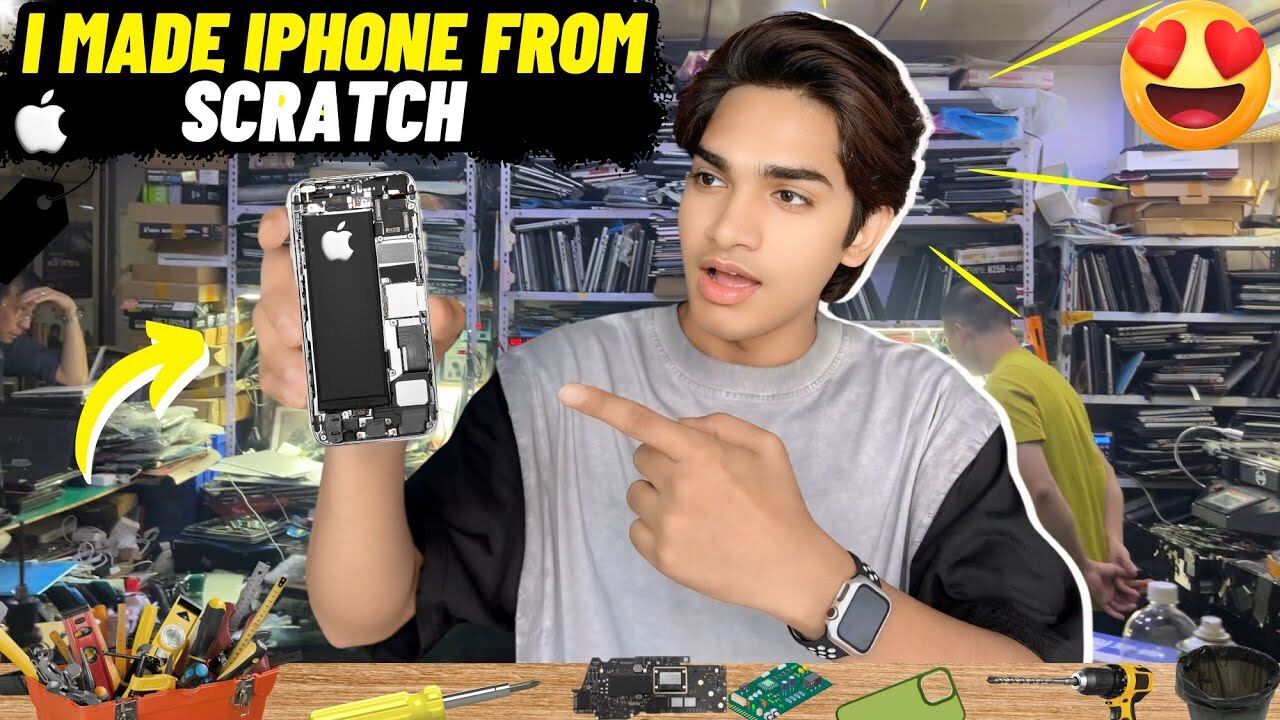
A YouTuber shows how he made an iPhone from scratch in Shenzhen
This is not a local story alone. Foreign makers and entrepreneurs have been woven into Shenzhen's narrative for years. Consider Scotty Allen, an American software engineer who walked into Huaqiangbei with a curious idea: could he build an iPhone from scratch, using only parts sourced from the market stalls? Over weeks, Allen charmed vendors, soldered circuits, and assembled a fully functional device for roughly $300 in parts. His journey, documented online, captivated millions and crystallized a truth: Shenzhen is the only place on Earth where an individual, with no factory and no corporate backing, can prototype a complex electronic product at the speed of conversation.
Then there is the story of Jesse Warren, a Dutch designer who came to Shenzhen on a short trip and never really left. He launched a hardware startup inside Chaihuo Makerspace, a collaborative workshop tucked away in an industrial park. With laser cutters, 3D printers, and a network of engineers who spoke the global language of CAD files, Warren turned a sketch into a market-ready consumer product in under a year. "In Shenzhen," he once told a visiting journalist, "you don't find suppliers. You walk outside, and they find you." This is the city's unique gravitational pull: it collapses the distance between idea and object so dramatically that even skeptics become believers.
Living History, from Hakka Villages to Skyscrapers
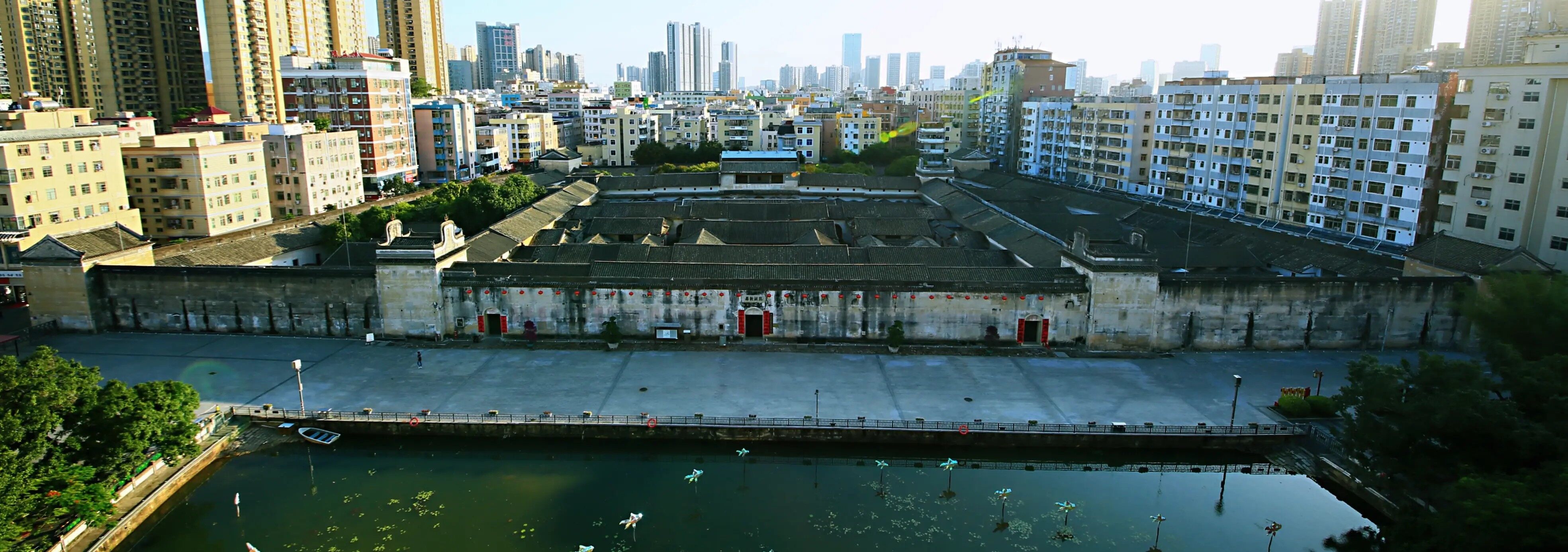
A striking contrast of old and new: the ancient grey ramparts of Crane Lake Hakka Fortress framed by towering downtown skyscrapers
Shenzhen's story is not just silicon and speed; it has deeper roots. Long before the skyscrapers, the area was home to Hakka and Cantonese communities. In the Longgang district, the massive Hakka walled villages, some the size of medieval fortresses, still stand, their stone walls and ancestral halls a quiet rebuke to the glass towers nearby. The Crane Lake Fortified Hakka Village, built in 1791, houses a museum where you can see the intricate carvings and ancestral tablets of a clan that once defended itself against bandits. Today, those same halls sometimes host tech meetups and maker workshops, a collision of centuries that feels uniquely Shenzhen.
And then there is Shekou, the waterfront peninsula that in 1979 was a barren strip of coastline. It was here that China's reform era truly ignited, with the explosive demolition of an old hill (the famous "Shekou blast") to make way for a port. Today, Shekou is a cosmopolitan enclave of international schools, expat-friendly cafes, and the Sea World cultural complex, where a former Soviet cruise ship rests as a hotel. The story of Shekou is the story of Shenzhen in miniature: an audacious bet on openness, paid off beyond imagination.
Write Your Own Shenzhen Story with Into South China
Shenzhen does not sit passively waiting for tourists to photograph it. It challenges you to engage, to build, to invest, to learn, and to be changed. That's where Into South China comes in. We design immersive, story-driven journeys for international professionals, makers, and investors who want more than a conference badge and a taxi ride. We don't just point at buildings; we introduce you to the people inside them.
Imagine starting your day with a private tour of Huaqiangbei guided by a bilingual electronics engineer who can translate not just the language but the supply chain. You'll meet a component vendor who has been behind the same counter for 20 years and hear his personal story of the market's evolution. In the afternoon, we arrange a visit to a maker space where you can collaborate with local innovators and even prototype a gadget of your own. In the evening, you might share a Hakka feast inside a century-old fortified village, listening to a clan elder describe life before the towers, while your business partner sips gongfu cha made by a local master.
Need to decompress after a deal? We'll transfer you via high-speed rail to Hong Kong for a Victoria Harbour night cruise, or arrange a weekend escape to the misty karst landscapes of Guilin, the golden beaches of Hainan, or the UNESCO diaolou watchtowers of Kaiping, each location woven into a seamless itinerary that blends business with discovery. We handle every logistical thread: airport pickup, cross-border transfers, accredited hotels, English-speaking local guides who know both corporate etiquette and the best street food stalls. Your story in Shenzhen begins with your ambition. We simply clear the path.
Shenzhen is a city built by people who refused to wait for permission. Its streets are paved with stories of improbable leaps and midnight soldering sessions that became global brands. Come for the meetings, stay for the making, and leave with your own improbable chapter. Contact Into South China today and let us craft a bleisure adventure that turns your Shenzhen trip into a narrative you will tell for years.