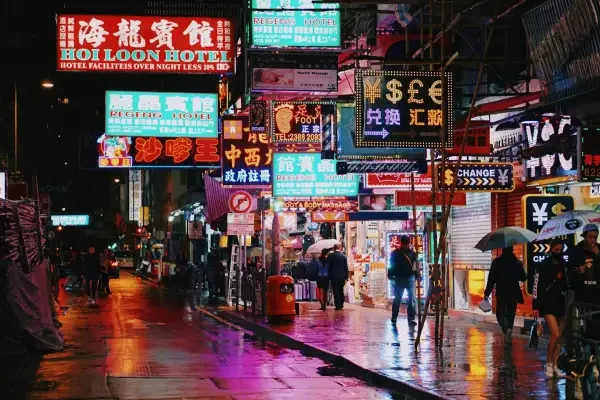
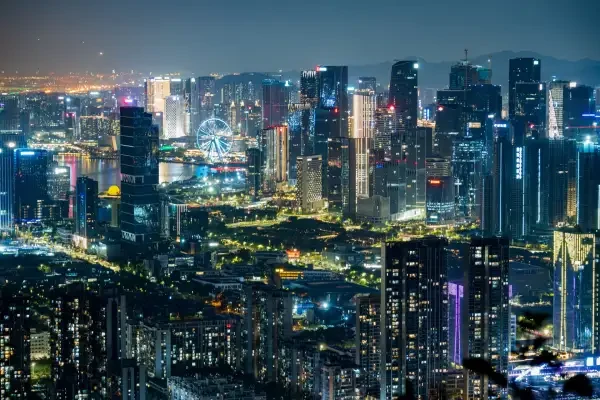
Think of it as China’s Florida, California, and the Caribbean rolled into one, with a dash of Siberian exile history.
Many foreigners know that China is vast. But few grasp how different its regions truly are. To understand South China, specifically Guangdong, Guangxi, Hainan, Hong Kong, and Macau, you need to forget the icy winters of Beijing and Shanghai. This is a subtropical world of steaming jungles, monsoon rains, and year‑round humidity.
And here’s a surprising comparison: For much of Chinese history, South China was what Siberia was to the Russian Empire.
The “Siberia of Ancient China”
In czarist Russia, Siberia was a frozen wasteland, a place where emperors sent political criminals, rebellious nobles, and unwanted souls. The message was clear: Go there and suffer.
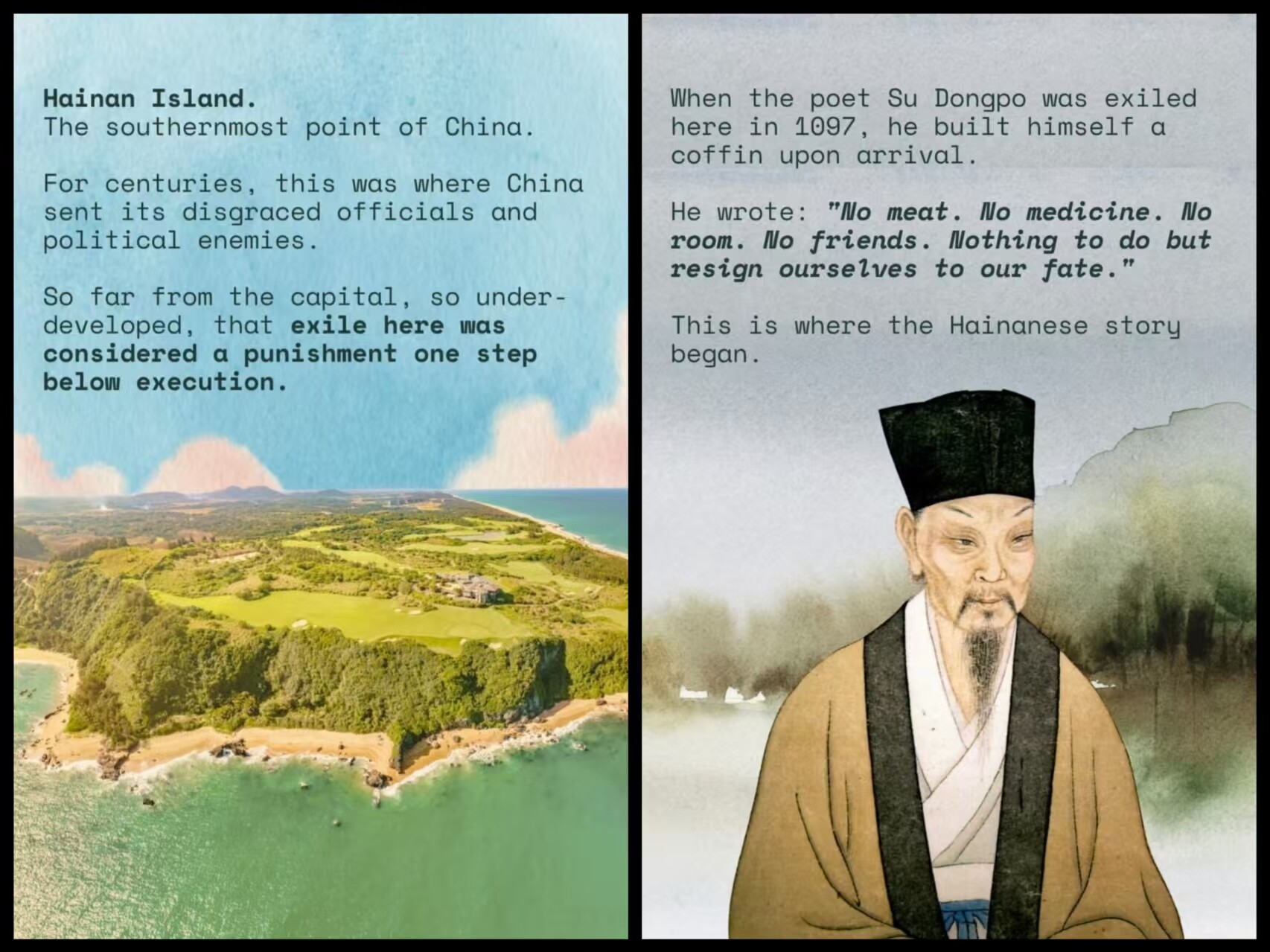
Ancient China had its own version, but instead of cold, the punishment was heat, disease, and an impenetrable jungle. The region south of the Five Ridges (Nanling), known as Lingnan (roughly today’s Guangdong, Guangxi, and Hainan), was a steaming, malarial frontier. For a Chinese official from the dry north, being exiled to “the land beyond the ridges” was a living nightmare. The poet Su Dongpo (Su Shi) was banished to Hainan in the 11th century. He complained of the humidity, the poisonous insects, and the utter lack of civilization.
Just as Russian exiles shivered in log cabins near the Arctic Circle, Chinese exiles sweated in thatched huts surrounded by rainforest. Both were sent to the edge of the known world, one frozen, one tropical.
Why So Desolate? Blame Technology.
Today, Guangzhou is a megacity of 19 million people. But two thousand years ago, the area was thinly populated. Why? Climate and disease. Without air conditioning, mosquito nets, or modern medicine, Lingnan’s subtropical heat and humidity were deadly. Malaria, dengue, and other tropical illnesses killed newcomers. The soil was poor for northern grains like wheat and millet. The dense jungle seemed hostile to “civilized” life.
Compare that to Siberia. Before central heating and insulated railways, the extreme cold killed just as surely. Both regions were “the land of no return”, terrifying not because of human enemies, but because nature itself was the executioner.
The Turnaround: Trade, Technology, and Emigration
Everything changed with three things: ships, rice, and rails.
Maritime trade: From the Tang Dynasty onward, Guangzhou became a hub for Arab, Persian, and later European merchants. The same hot, humid climate that made life miserable for northern officials made Lingnan perfect for growing tropical goods, tea, sugarcane, bananas, and citrus.
Agricultural adaptation: Farmers learned to grow fast‑ripening rice (two or three harvests a year). The swampy land, once a curse, became a rice bowl.
Opium Wars & treaty ports: When Western gunboats forced China open in the 19th century, Hong Kong was ceded to Britain, and Guangzhou, Macau, and other ports became gateways to the West. The “desolate south” suddenly became China’s most outward‑looking, entrepreneurial region.
By the 20th century, Guangdong was the homeland of millions of overseas Chinese, from San Francisco to Singapore. The same coastal location that once made it a backwater now made it a springboard.
South China Today: What the Comparison Means for Travelers
So when you visit today’s South China, you are walking on land that was once China’s equivalent of Siberia, a place of exile, fear, and hardship. That history adds depth to every modern experience.
Hong Kong: A vertical city of skyscrapers and finance, but also a network of hiking trails and remote islands where exiled scholars once hid.
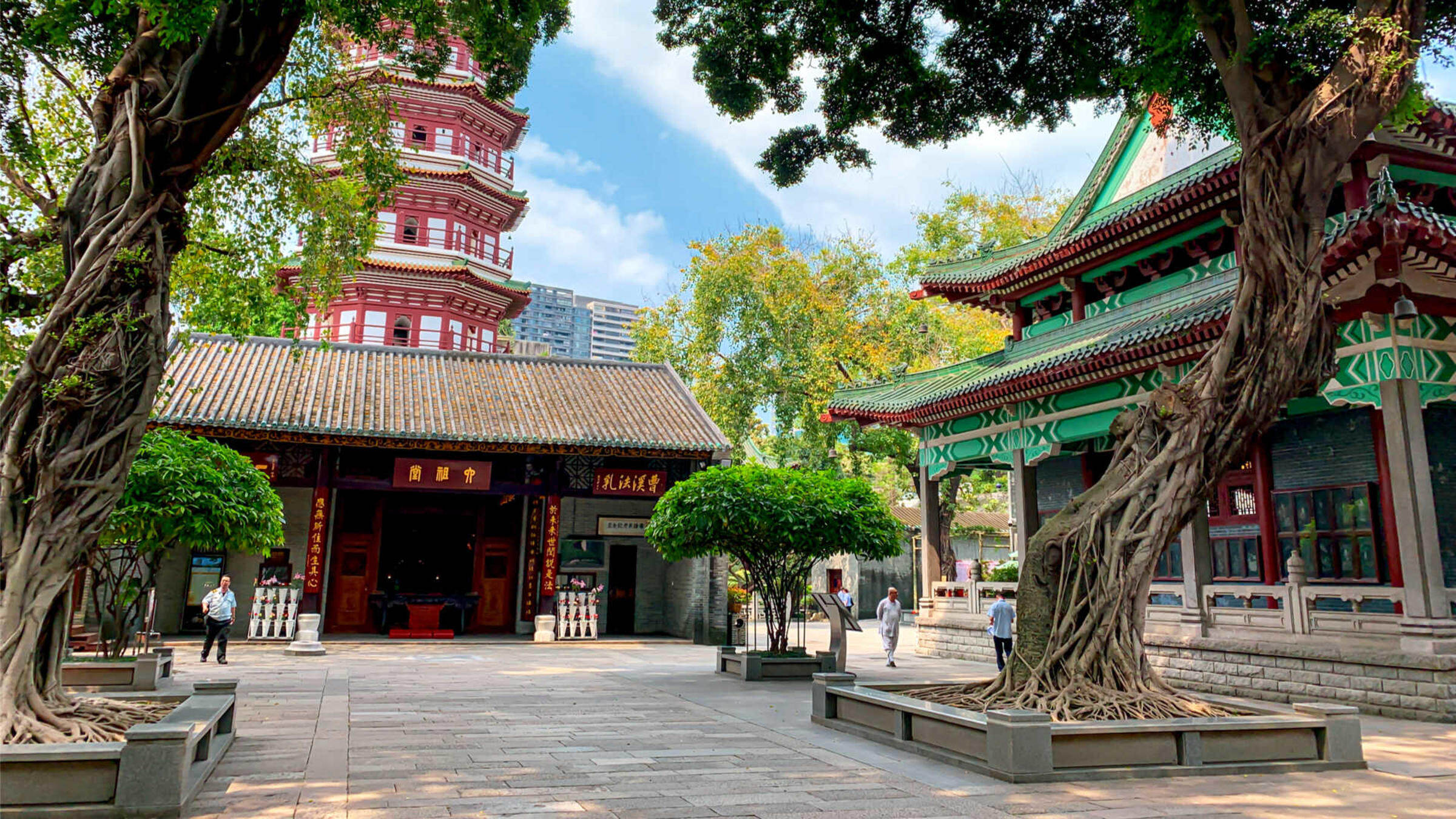
Framed by gnarled centuries-old banyan trees, the Temple of the Six Banyan Trees in central Guangzhou holds a profound, lesser-known history: for generations, it offered sacred refuge to exiled Buddhist monks cast out amid political unrest and religious upheaval
Guangzhou: A 2,000‑year‑old trading port. You can still see the remnants of the old “foreign factories” and the Temple of the Six Banyan Trees, where exiled monks sought refuge.
Guilin & Yangshuo: The stunning karst mountains were once impenetrable hideouts for bandits and rebels, not unlike the dense taiga of Siberia.
Hainan: Now a tropical beach resort with duty‑free shopping. But climb into the interior’s rainforests, and you’ll find the paths once trodden by exiled officials like Su Dongpo.
A Final Metaphor
If Siberia is the cold edge of a great empire, a place of endurance, exile, and eventual resource wealth, then Lingnan (South China) is its hot mirror image. Both were feared, both were used as punishment, and both eventually transformed into economic powerhouses. The difference? Siberia gave the world vodka and diamonds. South China gave the world dim sum, kung fu, and the world’s largest manufacturing hub.
For the international traveler, understanding this history makes the humidity bearable. Every sweaty step through a Guangzhou market or a Yangshuo rice paddy connects you to centuries of exiles, traders, and survivors who turned a “poisonous swamp” into one of the most dynamic regions on Earth.
Into South China invites you to explore South China, not as a tourist, but as a traveler who knows the stories behind the scenery.