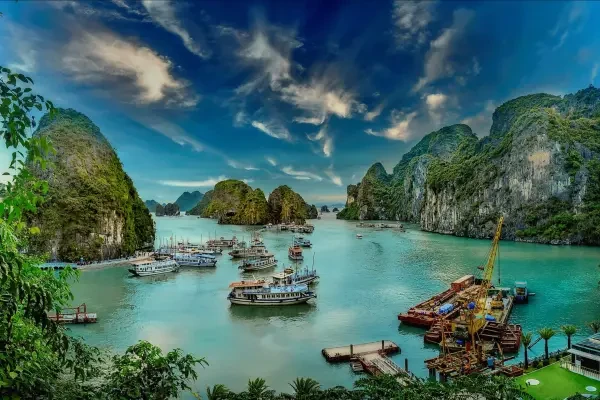
Most visitors see Hong Kong from the Peak tram, Macau from a Cotai Strip limousine, and Guangzhou from the dizzying heights of the Canton Tower. The photographs are stunning, the views curated, and yet, something essential is missing. The true soul of the Pearl River Delta doesn't live inside a shopping mall or a casino resort. It breathes in the steam rising from a noodle stall at dawn, in the shuffle of canvas shoes during a park-side tai chi session, and in the clatter of mahjong tiles drifting from an open window down a back alley. To find it, you must step off the well-polished tourist circuit and into the rhythm of daily life.
Hong Kong’s Sham Shui Po: A Symphony of the Everyday
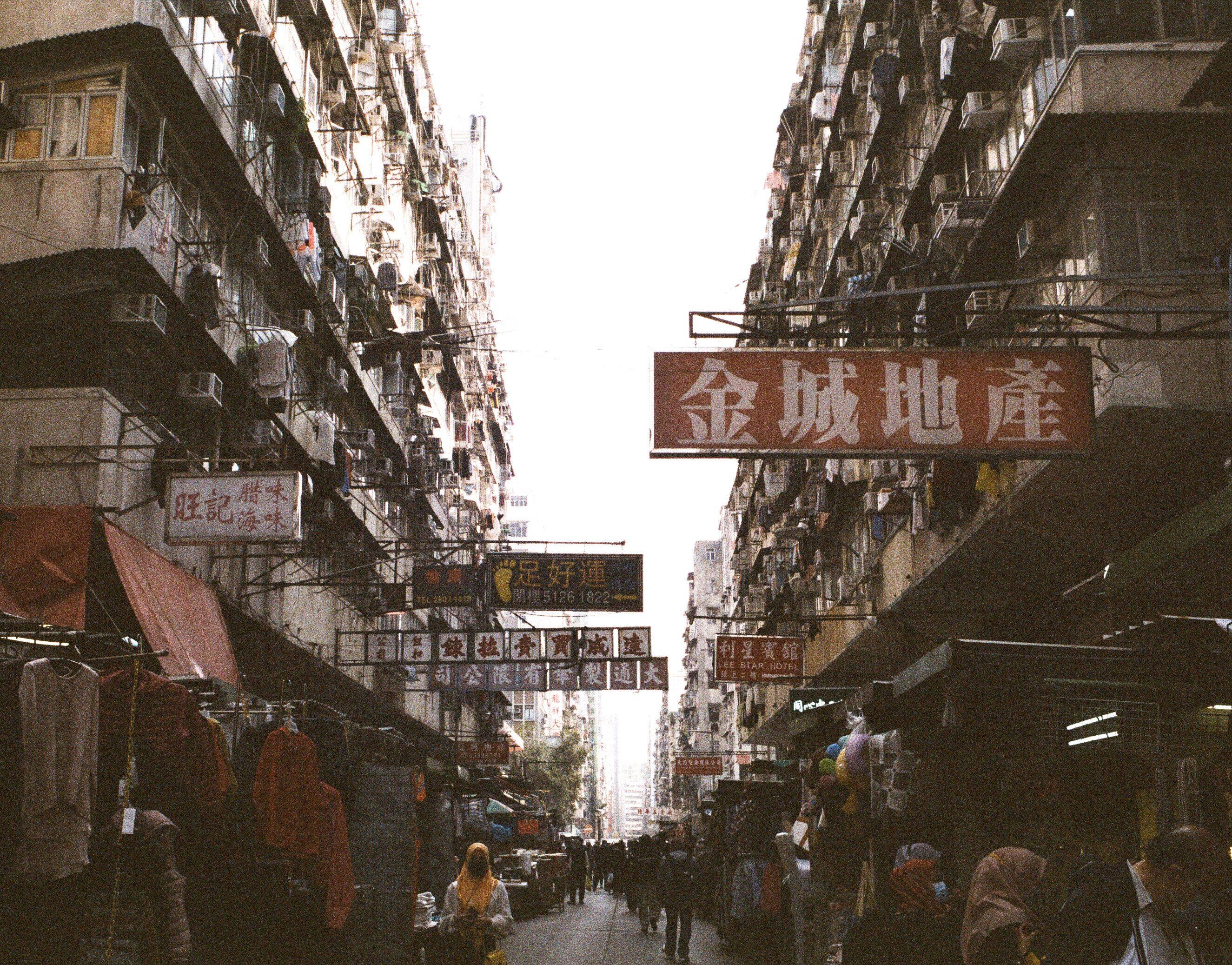
Explore the vibrant atmosphere of Sham Shui Po's street market in Hong Kong, capturing daily life and urban energy
Skip the predictable queue for the Peak tram. Instead, board the MTR to Sham Shui Po, one of Hong Kong’s most densely packed and unapologetically authentic working-class neighbourhoods. Here, the city sheds its glass-and-steel armour. Along Ki Lung Street, entire lanes are devoted to fabric: rolls of silk, cotton, and brocade spill from shop fronts in a riot of colour, while elderly tailors sit at vintage sewing machines, crafting garments for customers who have been coming for decades. On Apliu Street, the electronics market is a treasure hunt; stalls sell everything from vintage radios to obscure cables, and the air hums with the static of a thousand gadgets being tested.
At the heart of Sham Shui Po, you will find a cup of milk tea that will reset your standards forever. The secret lies in the silk-stocking filter, through which a blend of strong Ceylon tea is poured repeatedly until it achieves an impossibly smooth, almost creamy texture. Locals order it “zau chai”, with evaporated milk, and sip it standing at a counter, sometimes with a warm pineapple bun, its crumbly top crust a perfect foil to the tea’s boldness.
Early risers should consider a dawn hike up Lion Rock. Unlike the Peak, crowded with selfie sticks and branded cafés, Lion Rock is a community of regulars, retirees in singlets, young couples, and solo hikers who greet each other with a nod. The 495-metre summit rewards you with a sweeping panorama of Kowloon and Hong Kong Island, but the real gift is the sense of belonging to a quiet, local ritual. By midday, appetite fully earned, head to Fuk Wing Street’s open-air dai pai dong, where clay pot rice is cooked over charcoal flames. The pot arrives at your table still hissing, a layer of soy sauce caramelising against the hot clay, the rice underneath studded with cured sausage, chicken, and earthy mushrooms. You eat shoulder to shoulder with off-duty construction workers, office clerks, and pensioners who have been coming to this very stall for thirty years. No one rushes you. The meal costs less than a cocktail at a Central rooftop bar, but lingers far longer in memory.
Macau: Beyond the Casino Lights
Forget the casino shuttle. The real Macau reveals itself when you take the public ferry from Hong Kong, a journey that places you among weekend trippers, families carrying boxes of pastries, and old men who have made this crossing for decades. The ferry terminal is not glamorous, but it is alive with the hum of Cantonese chatter and the slap of waves against the hull.
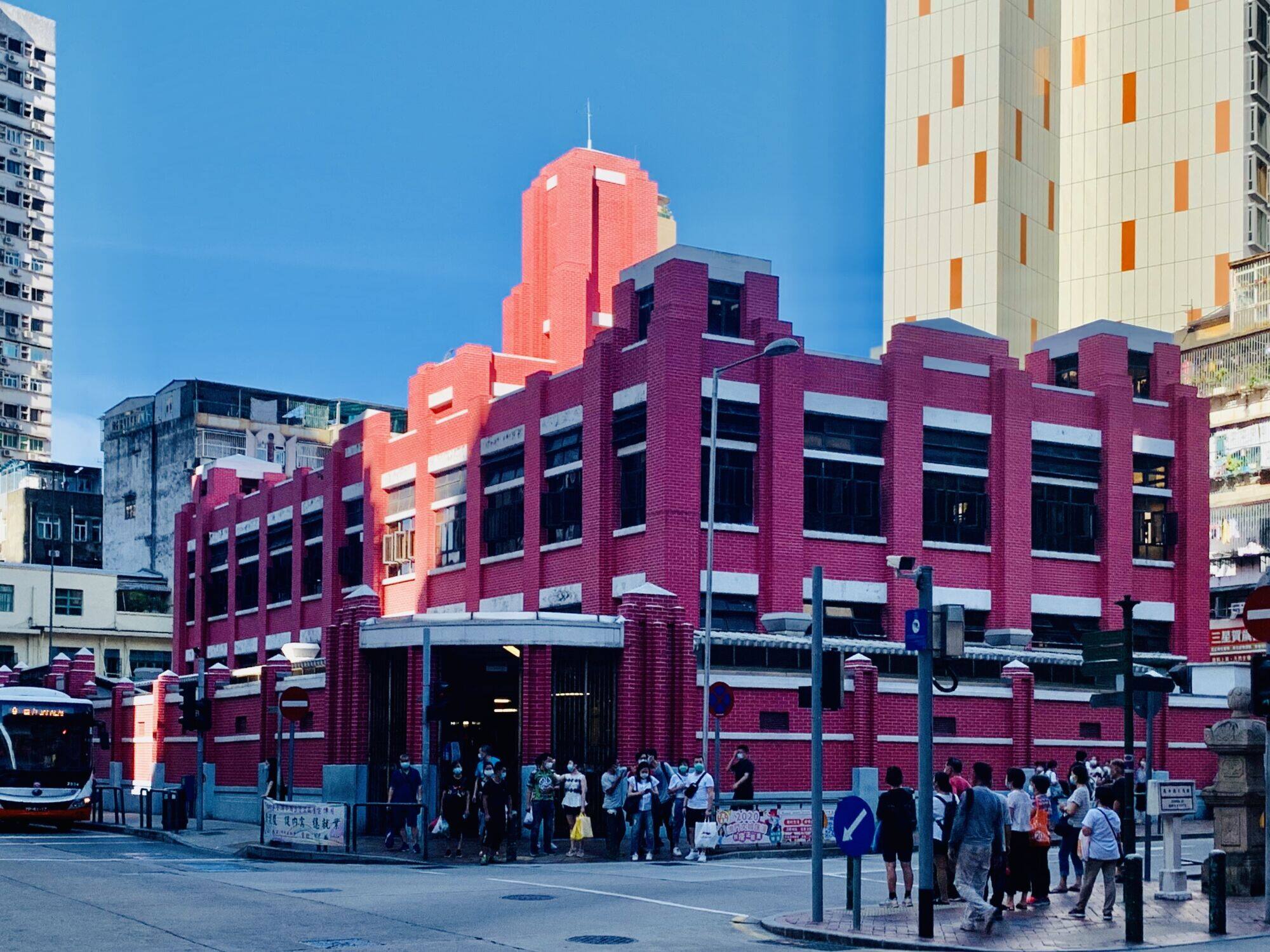
One of the most populated markets in town, offering an array of different stalls with various food options
Upon arrival, walk, don’t drive, to the Red Market. This three-storey, red-brick building has been the stomach of Macau since 1936. On the ground floor, fishmongers’ stalls gleam under fluorescent lights: groupers, pomfret, and live eels wriggle in shallow tanks. Aunties squeeze past you with plastic baskets, slapping fresh fish onto ice with practiced authority. The air is thick with the mineral scent of seawater and crushed ice. Upstairs, butchers cleave pork ribs with rhythmic thuds, while vegetable vendors arrange bright choi sum and bitter melon into neat green towers.
From the market, thread your way through the narrow back alleys that wind behind the iconic Ruins of St. Paul’s. This is a Macau the day-trip crowds never see: cobblestones worn smooth, bougainvillea spilling over garden walls, and tiny, unmarked doorways leading to workshops where old men carve religious statues or repair antique clocks. In one such alley, there is a shop no wider than a doorway. Its owner, a man in his eighties, opens a wooden bucket and ladles out bowls of tou fu fa, silken tofu pudding so delicate it quivers at the touch of a spoon. He adds a spoonful of ginger syrup, no more, and hands it to you with both hands. Eat it standing in the lane, the morning light slanting through the gaps between buildings, and you will understand that Macau’s true luxury has nothing to do with gold-leaf lobbies.
Before leaving, follow the scent of baking pastry to a nearby pastelaria. Macau’s Portuguese egg tarts are justly famous, flaky, buttery, with a custard centre blistered dark on top, but the lesser-known almond cookies, made with mung bean flour and crushed almonds, crumble on the tongue and come pressed into shapes that tell a story. These are the edible souvenirs worth carrying home.
Guangzhou: A Day in the Life of Old Canton
The journey from Macau to Guangzhou no longer requires a slow, rattling green train. Instead, you walk across the Gongbei border crossing into Zhuhai, a lively procession of locals pulling suitcases and traders carrying cardboard boxes. After clearing immigration, a short taxi ride brings you to Zhuhai’s high-speed railway station, where a modern, punctual train waits to whisk you to Guangzhou in just under an hour. The carriage is bright and quiet, the seats comfortable, but you still glimpse everyday life: a young woman video-calls her parents, a man carefully places a bag of Macau almond cookies in the overhead rack, and outside the window, the Pearl River Delta unfolds in a blur of green fields and distant factory chimneys. The transition from the Portuguese cobblestones of Macau to the old Cantonese heart of Guangzhou feels seamless, less a physical journey than a gentle shift in atmosphere.
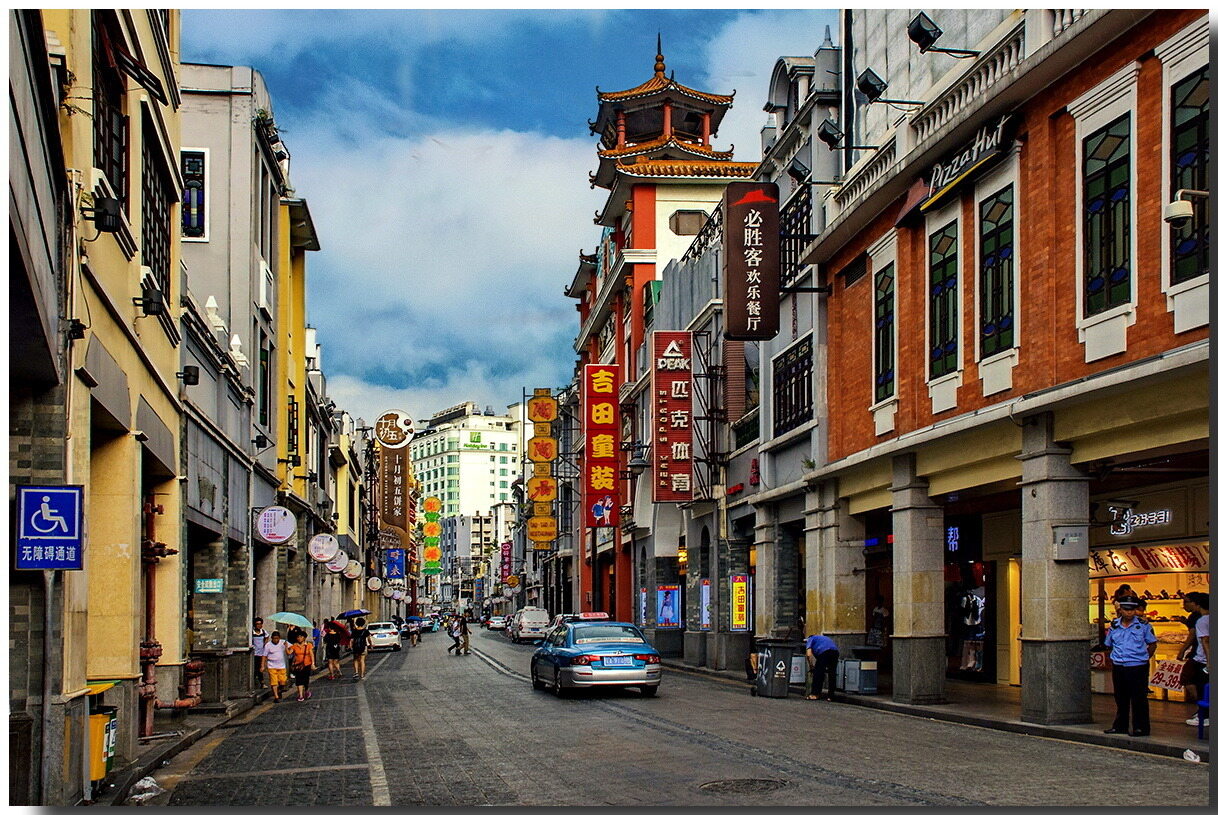
Historic Qilou arcades of Liwan, Guangzhou: where old Cantonese architecture meets modern city life
Your destination is a homestay in Guangzhou’s Liwan District, the cradle of old Cantonese culture. Here, the streets are narrow and shaded by qilou arcades, a legacy of the 1920s trade era, and the buildings still bear the patina of their original lime wash. Your host, perhaps a retired chef or a grandmother who has lived in the same lane house for sixty years, will almost certainly insist on taking you to the morning market. You will leave at six, basket in hand. At the market, the produce is seasonal and startlingly fresh: water spinach with roots still clumped with earth, translucent-skinned shrimp jumping in a plastic tub, lychees the colour of sunset when in season. Your host haggles on your behalf, exchanging rapid-fire Cantonese, and you leave not just with ingredients but with a small circle of newly made friends.
Back in the home kitchen, cooking becomes the day’s centrepiece. Stir-frying a simple plate of ginger-scallion shrimp over a high flame, your host teaches you the unwritten rules: the wok must be smoking, the oil must swirl, the shrimp must be added at exactly the right second. You learn that Cantonese cooking is not about masking flavours with sauces but about respecting the ingredient’s original character. Lunch stretches into early afternoon, food shared with family members who drop by unannounced. There may be a pot of gungfu cha afterwards, tiny cups of oolong tea passed around a table covered in a patterned cloth.
As dusk settles, join the evening ritual along the Pearl River embankment. The promenade is a living theatre: retirees waltz to music from a crackling speaker, a man practises his calligraphy with water on the paving stones, and children chase each other through the trees. You can rent a public bicycle, ride slowly past the colonial-era buildings of Shamian Island, and feel not like an observer but a participant in a communal rhythm. The Canton Tower may glitter in the distance, but you will find that the truer illumination comes from the laughter of the dancers and the soft lap of river water against the embankment.
Your Local Bridge to the Pearl River Delta
This is the South China you won’t find in a luxury brochure, not because it’s hidden, but because it requires someone to translate the language, the cultural codes, and the unspoken rules of the street. Into South China exists for exactly this purpose. We arrange homestays with local families who welcome you as a temporary member, not a guest; we guide you through Sham Shui Po’s fabric maze with a local who grew up there; we handle your seamless transfer from Macau to Guangzhou, including high-speed train tickets and border-crossing assistance; we secure a seat at the dai pai dong before the lunch rush, and provide an English-speaking cultural interpreter who can explain why the man at the tou fu fa stall uses ginger syrup made from old ginger, not young. Our intimate knowledge of Guangdong, Hong Kong, and Macau means you can immerse yourself fully, without anxiety over logistics or language. Contact us, and let us unlock the Pearl River Delta that lives beyond the guidebook, where real life, real flavours, and real connections await every morning.
Client Review
"Finally, a travel experience that showed us the REAL Hong Kong, Macau and Guangzhou! Walking through wet markets at dawn, eating clay pot rice alongside local workers, taking public ferries instead of tourist shuttles – this was authentic China. Our host family in Guangzhou taught us how to make dim sum, and we joined retirees for tai chi in Liwan Park."
Trip Highlights
- ✓
Local Market Immersion
Dawn visits to Sham Shui Po market, Kowloon City wet market, and Guangzhou Huangsha seafood wholesale market – shop and cook alongside locals
- ✓
Authentic Dai Pai Dong Dining
Clay pot rice at Fuk Wing Street, milk tea at cha chaan teng, soy pudding from wooden buckets in Macau's old alleys
- ✓
Public Transport Adventures
TurboJet ferry to Macau, slow K-train to Guangzhou, city buses with local commuters – experience daily life in motion
- ✓
Community Cultural Activities
Tai chi with retirees at Liwan Lake Park, Cantonese opera in Kowloon Park, mahjong games, square dancing by Pearl River