South China, encompassing Guangdong, Guangxi, Hainan, Hong Kong, and Macau, may not be the first region that comes to mind when planning an Islamic China travel itinerary. Destinations like Xi'an and Xinjiang rightly draw Muslim visitors with their deep Islamic history. Yet South China holds its own treasures: one of the country's oldest mosques, a quiet network of halal eateries, and a subtropical landscape that has welcomed Muslim traders and communities since the Tang Dynasty. This practical guide is designed to help you explore the region comfortably while honoring your faith.
Historic Mosques and Prayer Spaces
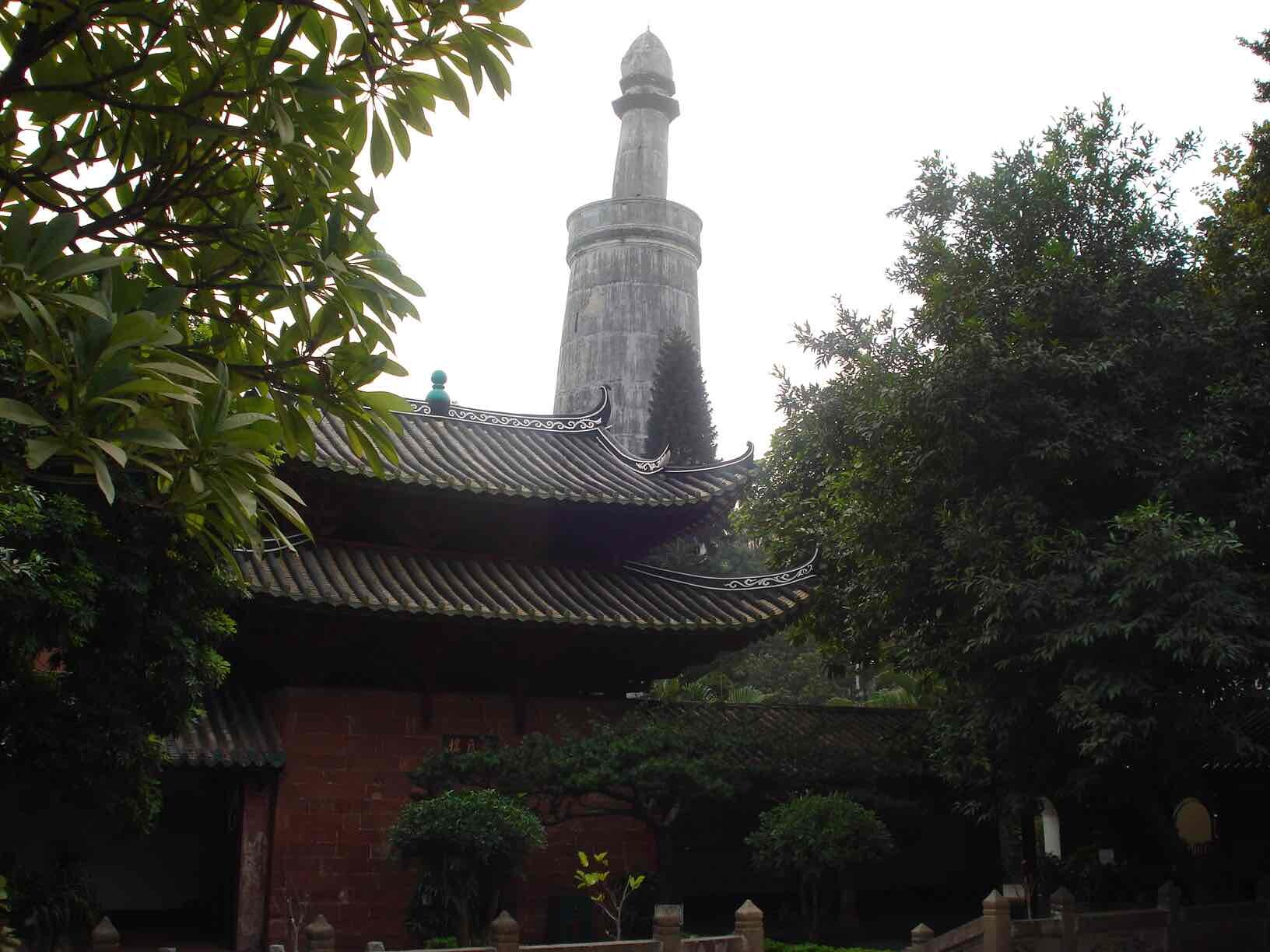
The minaret in Huaisheng Mosque was said to serve as a beacon to boats, which earned it the name “Lighthouse Mosque”
The spiritual anchor of the region is Guangzhou's Huaisheng Mosque, believed to be one of the oldest mosques in China, dating back to the 7th century. Its minaret, known as the Guangta or "Light Tower," once served as a beacon for ships on the Maritime Silk Road. Today, the mosque remains an active place of worship and welcomes foreign Muslim visitors, especially during Friday prayers. Non-Muslim companions can visit outside prayer times with modest dress.
Other cities also offer prayer facilities. Shenzhen Mosque serves the city's growing Muslim community with a modern, spacious prayer hall. In Nanning, the capital of Guangxi, the Nanning Mosque provides a quiet space in the city center. On Hainan Island, Haikou Mosque and Sanya Mosque cater to both locals and visiting Muslim tourists. Hong Kong's Kowloon Mosque, with its white marble facade and four minarets, is a landmark near Tsim Sha Tsui and can accommodate thousands of worshippers. Macau's Macau Mosque is smaller but welcoming.
For daily prayers while out sightseeing, many major airports across South China have prayer rooms. International chain hotels in Guangzhou, Shenzhen, and Hong Kong can often provide a prayer mat and Qibla direction upon request; it is wise to ask when booking. In rural areas like Guangxi's karst valleys or Hainan's interior, plan your prayer schedule around travel times and identify a quiet spot beforehand. Prayer time apps like Muslim Pro function well with a VPN, which you should install before arriving in mainland China.
Finding Halal Food
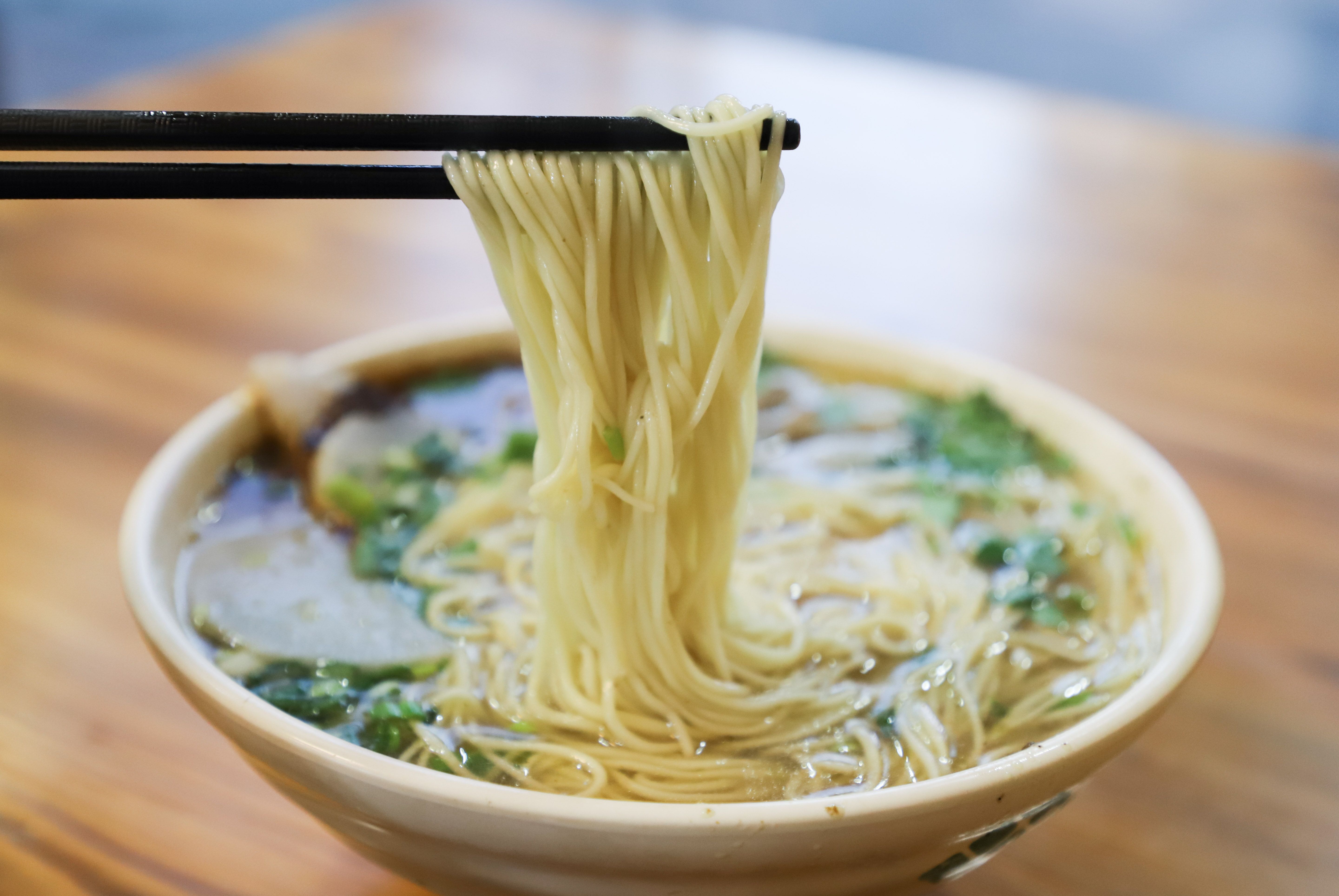
Savor the mouthwatering taste of fresh ramen noodles lifted by chopsticks
Halal food in South China is readily available if you know where to look. The most reliable sign is the Chinese phrase "清真" (qīngzhēn), often displayed in green with Arabic script. This label is placed on both restaurant storefronts and packaged goods. The backbone of halal dining in the region consists of Hui Muslim restaurants and Lanzhou ramen shops. These modest noodle houses, run by Hui families from northwest China, serve hand-pulled beef noodles, steamed dumplings, and stir-fried vegetables, all prepared according to Islamic dietary rules. They are found in every major South China city, often near train stations and university districts.
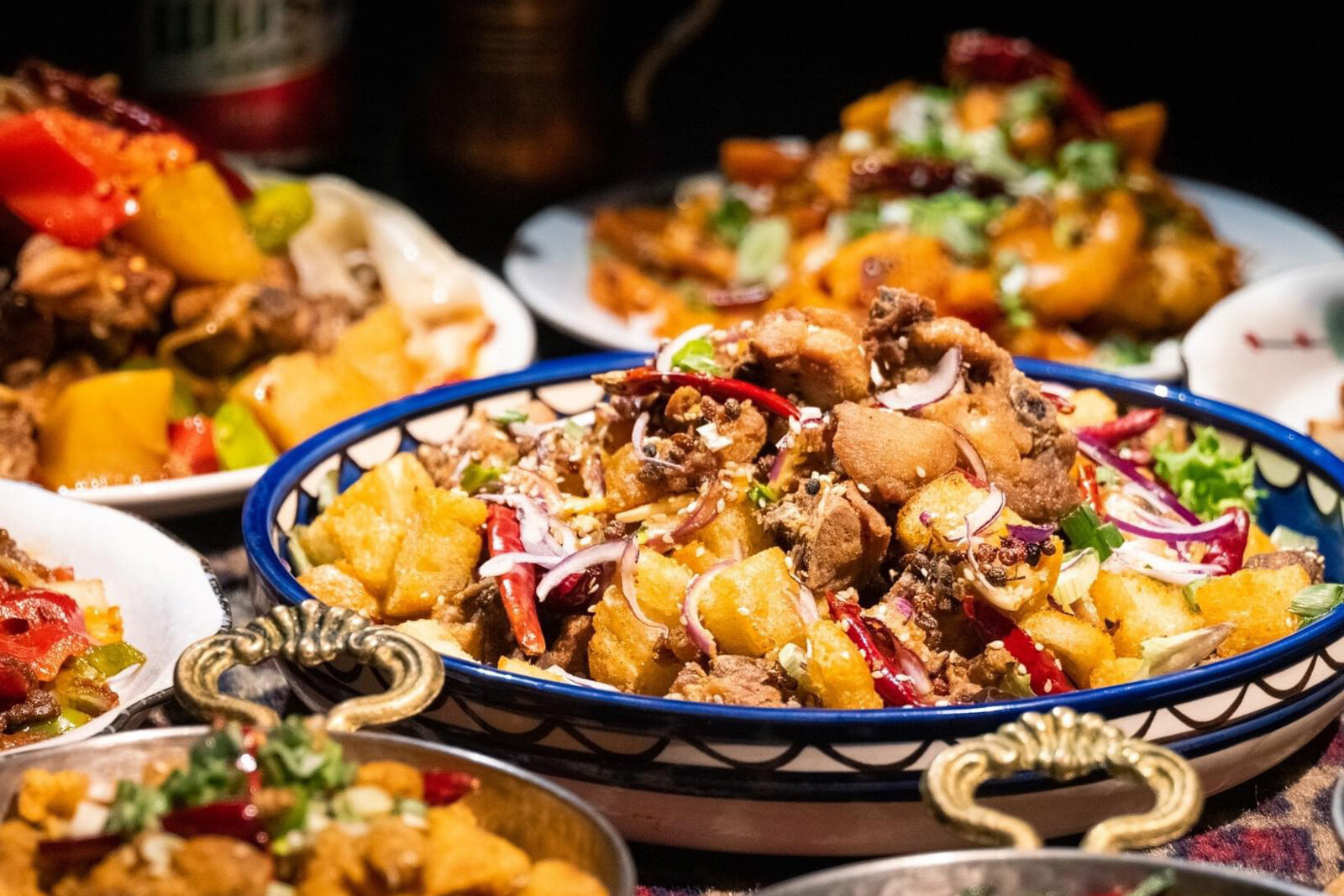
Rich, hearty Uyghur feast laid out on the table
For more variety, Uyghur restaurants from Xinjiang offer grilled lamb skewers, naan bread, and hearty rice pilaf. The flavors are bold and meat-centric, a satisfying contrast to the lighter Cantonese cuisine around them. In coastal areas like Beihai and Haikou, fresh seafood can be a safe choice; request steaming or grilling without soy sauce (which may contain alcohol) and ask for plain rice.
Hong Kong and Macau have a more developed halal infrastructure. Certified halal restaurants range from dim sum parlors to international buffets, and the Incorporated Trustees of the Islamic Community Fund of Hong Kong publishes a regularly updated list of certified outlets. Macau's halal scene is smaller but includes several Malaysian and Indonesian eateries.
When dining at non-halal restaurants, stick to vegetarian dishes and clearly state "no pork, no alcohol." Learning the phrase "wǒ chī qīngzhēn" (I eat halal) can be helpful. Translation apps like Google Translate, downloaded with the Chinese language pack before your trip, can also convey your needs. For convenience, halal-friendly food delivery apps like Meituan allow keyword searches, though the interface is mostly in Chinese. Your hotel concierge or a local guide can assist.
Practical Tips for a Smooth Journey
Ramadan and Fasting: If your trip coincides with Ramadan, plan sightseeing around fasting hours, especially in the humid summers. Large mosques like Huaisheng and Kowloon Mosque hold Taraweeh prayers and community iftars. Hotels with kitchenettes make pre-dawn suhoor preparation easier.
Dress and Etiquette: South China's climate is hot and humid. Lightweight, breathable fabrics are essential. When visiting mosques, women should bring a scarf to cover their hair, and both men and women should wear long sleeves and trousers. Outside religious sites, the region is casual, but modest dress is appreciated in rural villages.
Transportation and Connectivity: High-speed rail connects the entire region efficiently. Stations rarely offer halal food, so carry packaged snacks like dates, nuts, or instant halal noodles for long journeys. Download offline maps and translation tools before departure, as Google services are blocked on local networks. We recommend a VPN installed in advance and a Hong Kong SIM card with mainland roaming if you plan to cross borders frequently.
Accommodation: International hotel chains in Guangzhou, Shenzhen, and Hong Kong are accustomed to Muslim guests and can remove alcohol from minibars or provide prayer direction upon request. Boutique guesthouses and rural homestays may not be familiar with these needs, so communicate clearly at booking or let a travel planner handle the details for you.
A Note from Into South China
Our team at Into South China does not currently include Muslim members, but we bring a deep commitment to cross-cultural respect shaped by overseas study, living experience, and professional cross-cultural training. We understand the importance of halal dining, prayer timings, and modest accommodations, and we take care to arrange itineraries that honor these requirements. For specialized needs, we collaborate with local Muslim community contacts and guides to ensure a seamless experience. When you reach out to plan your Islamic China travel journey through South China, we listen carefully and build a trip that treats your faith not as a barrier but as a natural part of the adventure.
South China's Islamic heritage, from the ancient Light Tower to the steaming bowls of Lanzhou noodles, is waiting. With thoughtful preparation and a respectful local partner, your China Muslim travel experience here can be spiritually fulfilling and deeply memorable. Contact Into South China today, and let us shape a journey that welcomes you as you are.